Rhythm Hive
- 4.5
- Rating
- 10.00M
- Installs
- Free
- Price
 Analysis by App-foxy
If you enjoy K-pop and want a game that turns listening into an active challenge, Rhythm Hive is an easy one to understand but surprisingly demanding to master. I found its appeal strongest in the way it connects music-focused play with HYBE artists, giving fans a reason to return beyond simply chasing a high score. It is a free music game from DRIMAGE Co., Ltd, suitable for Everyone, and it has grown into a well-known choice with over 5 million installs and a 4.3 average from around 316 thousand ratings.
My first impression was that this is not just a generic tap-to-the-beat title with a K-pop theme pasted on top. The identity of the artists is central to the experience, and that makes the game feel more personal if you already follow the featured music. At the same time, a newcomer does not need deep knowledge of every artist to understand the basic rhythm gameplay. You can begin by following the notes, learn the timing gradually, and decide later how seriously you want to collect and improve.
What to expect when you begin
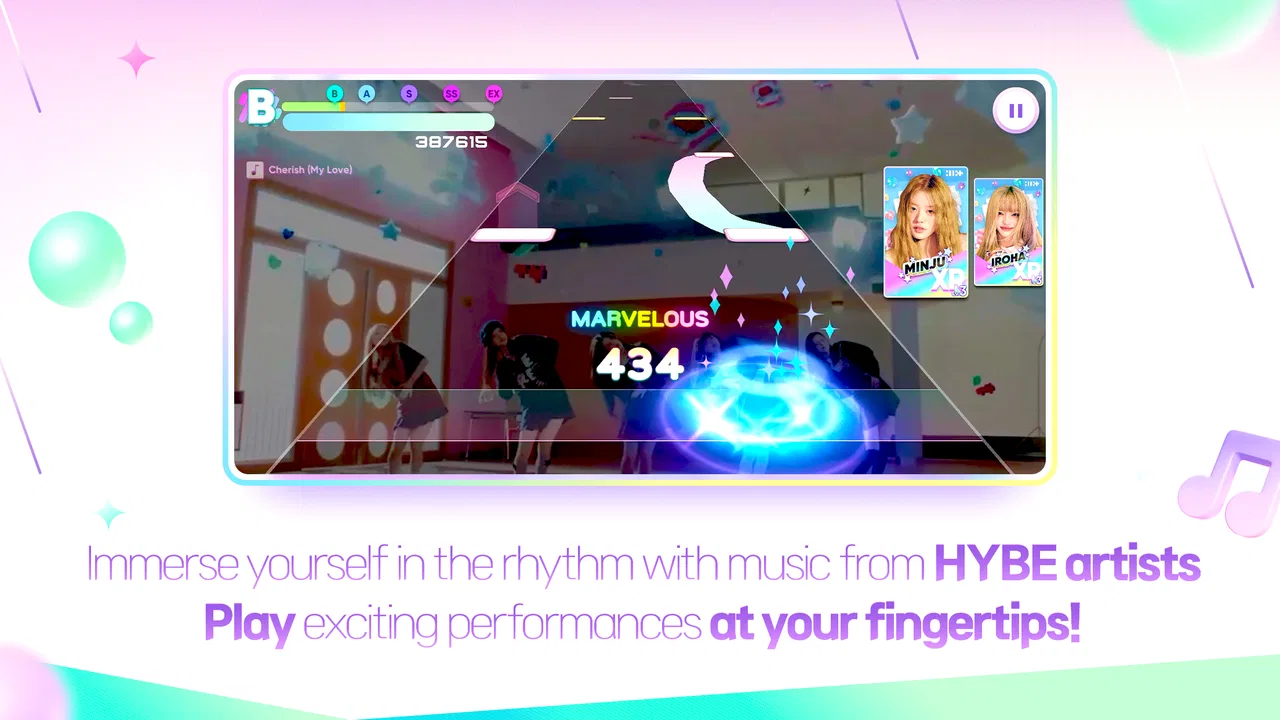
The core idea is familiar: musical notes arrive in time with a song, and you tap, hold, or respond as accurately as possible. The challenge is not only speed. It is also learning the visual rhythm of each track, keeping your attention when patterns become denser, and avoiding panic when several inputs arrive close together. I like that this creates a clear path from casual play to skill-based repetition.
You May Also Like

 Google Keep - Notes and lists
Google Keep’s Quiet Growth Shows the Appeal of Simpler Notes
As mobile work gets busier, Google Keep keeps winning a simple contest: capture a thought quickly, find it later, and get on with the day.

 Blood Strike: 2.5 Anniversary
Blood Strike’s Loadouts Turn Every Drop Into a Tactical Gamble
A close look at Blood Strike’s custom loadouts: how fast access to signature weapons reshapes its battle royale rhythm, rewards preparation, and narrows the gap between fights.

 Pandora - Music & Podcasts
Pandora’s Music Is Easy to Start, but Harder to Recover
Pandora’s strength is its low-effort path from a seed to a station. Its weak spot is how much confidence it asks you to place in connection, setup, and quiet recovery.

 8 Ball Pool
 Is Built on Rivalries, Rematches, and Routine
A close look at the rivalries, rematches, shared routines, and unanswered safety questions that turn a quick pool match into a persistent mobile community.

 Samsung Music
’s Quiet Strength Is Playing What You Already Own
Its reach comes less from spectacle than from dependable access to a personal library. That simplicity is both the app’s strongest retention engine and its ceiling.

 AccuWeather: Weather Radar
AccuWeather Review: A Quick, Clear Forecast for Everyday Decisions
For everyday plans, the best forecast is the one you can understand quickly. AccuWeather makes rain timing, radar, and local conditions easy to act on, with a few trade-offs.
More From Our News Desk



Rhythm Hive is best understood as a fan-oriented rhythm game rather than a broad music library. Its strongest reason to exist is the connection with HYBE artists, which gives the song selection and presentation a recognizable focus. If your favorite performers are represented, the game can feel like a small daily ritual. If you are looking for a huge mix of unrelated genres, a more general rhythm game may suit you better.
The game is free to start, but it includes optional purchases ranging from $0.79 to $129.99 per item. That wide range is worth keeping in mind before you become invested in collecting. I recommend treating purchases as optional from the beginning and deciding what kind of player you are: someone who wants a short music break, someone who enjoys improving scores, or someone who likes collecting themed content. Those goals can lead to very different experiences.
It runs on Android 7.0 or later, so many older Android devices can meet the basic software requirement. The current version is 2025.12.0, which is useful to check before troubleshooting because menus and presentation can change as the game develops. On iOS, the practical experience will depend on the device and operating system available to you, but the main point remains the same: this is designed for repeated short sessions rather than one long story campaign.
The kind of player who will enjoy it most
I would recommend it first to K-pop listeners who enjoy replaying songs, noticing small timing improvements, and building a connection with a particular artist or group. It also works for players who like games with a simple control scheme but a high skill ceiling. You do not need complicated buttons to make a rhythm title difficult; accuracy and concentration provide enough depth here.
A realistic use case is a short evening break. I might open the game after listening to music, choose a familiar track, and play several attempts while focusing on one problem, such as late taps or missed holds. That is more satisfying than playing mindlessly because each retry has a purpose. The same approach works during a commute or while waiting, provided you have enough attention for the notes and a stable way to play.
I would be more cautious about recommending it to someone who dislikes repeating songs. Rhythm games naturally ask you to replay the same material to improve, and the fan-focused presentation will not compensate for that if you want constant novelty. It is also not the best match for a player seeking a traditional adventure, a deep narrative, or relaxed listening without performance pressure.
Setting up a useful first session
After installing, my advice is to avoid rushing through every option just to reach the first song. Take a moment to notice which artist-related choices are presented and what the game is asking you to do. The first session is more useful when you treat it as orientation: learn where songs are selected, where progress is shown, and where the game separates playing from collecting or improving.
For a first attempt, choose a song you already recognize if one is available. Familiar music reduces the mental load because your ears already know the structure. That does not make the chart automatically easy, but it helps you understand whether a missed note came from poor timing, a visual distraction, or simply an unfamiliar pattern. A known song also makes the first successful run feel more meaningful.
Keep your phone steady and use headphones if they make the beat easier for you to follow. I would not treat headphones as a guarantee of perfect timing, because device response and personal comfort still matter, but they can make the relationship between the music and the incoming notes clearer. If the game feels slightly out of sync, do not immediately blame your reflexes. Pause and check whether your device setup is making the rhythm harder to read.
Another useful habit is to begin with a comfortable difficulty instead of selecting the hardest available option to prove something. A first failure on an advanced chart tells you very little. A clean or nearly clean run on a manageable chart teaches you more about the input style, note spacing, and timing expectations. Once you understand those basics, increasing the challenge becomes a deliberate choice rather than a frustrating guess.
How to reach the first meaningful success
Your first meaningful success should not be collecting the rarest item or finishing the most difficult song. For me, it is completing a familiar track while understanding why the result was good or bad. Focus on three things: watching the incoming notes rather than the score, tapping in time instead of chasing speed, and staying calm after one mistake.
That last point matters more than it sounds. A missed note can make new players rush the next input, creating a chain of additional errors. I found it better to accept the miss instantly and return attention to the next beat. Rhythm games reward recovery as much as raw reflexes. If you can finish a song without letting one mistake control the rest of the performance, you have already learned a skill that will carry into harder charts.
Use the earliest attempts to identify your personal weakness. If taps feel late, watch the note path more carefully and respond slightly earlier on the next run. If holds are the problem, keep your finger steady and avoid lifting just because another note appears. If crowded patterns overload you, look at the overall movement of the chart rather than staring at one note in isolation. These small adjustments are more effective than playing repeatedly without changing anything.
One non-obvious advantage of a familiar song is that you can separate musical anticipation from visual timing. Sometimes I expect a beat because I know the recording, but the game still requires me to follow the chart precisely. That distinction prevents a common mistake: tapping because the vocal or instrumental phrase feels ready rather than because the visual cue has reached the correct point.
Once you finish a track successfully, resist the temptation to immediately move to the most difficult content. Replay it once with a single goal, such as fewer misses or better control during the chorus. This turns a completed song into a practice tool. It also gives you a clearer sense of whether you genuinely enjoy the rhythm mechanics or are only attracted to the presentation.
Where new players can become confused
The biggest early confusion is usually the difference between playing well and progressing through the wider game. A good performance may feel like the obvious objective, but music games often surround each song with additional layers of rewards, cards, upgrades, or collection decisions. Rhythm Hive can therefore feel busier than its basic tap controls suggest. I recommend learning the play screen first and exploring collection-related areas afterward.
Another source of friction is the temptation to interpret every reward as something that must be spent immediately. I prefer to hold back during the first few sessions. Learn what each resource does, notice which choices directly improve your play experience, and only then decide whether to use it. This is especially sensible in a free game with optional purchases, because early excitement can make every offer look more important than it really is.
The presence of artist-focused content can also create a collecting mindset. That is enjoyable if you like organizing and completing sets, but it can distract from the actual rhythm challenge. I suggest separating the two goals: first ask whether you enjoy playing the songs, then decide whether collecting adds value for you. If the music gameplay is not satisfying on its own, spending more time or money on collection goals is unlikely to fix that.
Players may also wonder whether they need to know HYBE’s artists to get started. In my experience, familiarity helps emotionally but is not a requirement for understanding the controls. A fan will notice more details and may feel a stronger reason to return, while a curious rhythm-game player can still judge the title by its charts and timing. The important question is whether the available music appeals to you enough to support repeated attempts.
Difficulty is another area where expectations matter. A song that sounds calm can still have an awkward or demanding chart, while a fast track may feel manageable once its pattern becomes familiar. Do not judge difficulty only by tempo. Pay attention to note density, transitions, holds, and how quickly the chart changes direction. That is a more reliable way to choose your next challenge.
Practical ways to make sessions less frustrating
Play one song repeatedly with one specific improvement target instead of changing tracks after every mistake.
Choose a familiar track for learning timing, then use a less familiar one to test whether your skill transfers.
When a chart becomes crowded, watch the next small sequence rather than trying to predict the entire song.
Keep optional purchases separate from your decision about whether the core rhythm play is enjoyable.
Stop after a frustrating run and return later; tired reactions can make a timing problem look worse than it is.
One trade-off I noticed is that the same artist-centered design that makes the game attractive can make the interface feel more layered than a minimalist rhythm title. If you want to open an app, pick a song, and immediately play with almost no surrounding material, a simpler alternative may feel cleaner. Rhythm Hive is better for someone who enjoys the space around the songs as well as the songs themselves.
What to do after the first success
After you can finish a comfortable song reliably, choose your next step based on your preferred kind of progress. If you care about skill, raise the difficulty gradually and keep comparing your misses. If you care about artists and collection, explore those parts at your own pace without assuming that every available option needs immediate attention. If you mainly want a daily music break, create a small routine around a few favorite tracks rather than trying to master everything.
A useful advanced workflow is to alternate between precision practice and variety. Play one familiar song to work on accuracy, then choose another track to prevent your timing from becoming dependent on memorized cues. This helps reveal whether you are reading the chart or simply anticipating a song you know extremely well. It also keeps the session from becoming repetitive too quickly.
Another tip is to judge improvement by consistency, not only by your highest score. A lucky run can look impressive, but being able to reproduce a solid performance is more valuable. I would rather see my average attempts become steadier than chase one unusually strong result. That mindset also makes the game friendlier for people who are not naturally competitive.
If you are deciding between this and a more general rhythm game, the choice comes down to focus. Rhythm Hive offers a specific HYBE and K-pop identity, which is a major advantage for fans and a possible limitation for everyone else. A broader alternative may provide more varied music or a cleaner neutral presentation, but it will not deliver the same artist-centered reason to check in. Neither approach is automatically better; they serve different moods.
It is also worth remembering that the game is free but not entirely free of pressure. Optional items can become appealing when you are invested in a favorite artist or trying to improve your collection. I recommend setting a personal spending boundary before you start, especially because individual purchases can reach $129.99. Enjoying the game without buying anything should be your first test of whether it belongs on your phone.
The age rating of Everyone makes it broadly approachable, but that does not mean every player will find the experience equally comfortable. Younger players may need guidance around optional spending, while adults may simply want a quick way to interact with familiar music. The rating describes accessibility, not whether the collecting and progression style matches your preferences.
My recommendation after spending time with it
Rhythm Hive works because it gives a recognizable music fandom a playable routine. I enjoyed the way a familiar song could move from passive listening to active concentration, and I found the improvement loop rewarding when I approached it with a specific goal. The game is most convincing when I choose a favorite track, focus on timing, and see a performance become more consistent over several attempts.
Its limitations are equally clear. Players who want a huge range of unrelated music, a purely minimalist interface, or a game without collection and purchase considerations may prefer another rhythm title. New users can also feel overwhelmed if they explore every layer before learning the basic chart. The solution is not complicated: start with one familiar song, learn the controls, and postpone the surrounding systems until the play itself makes sense.
With an average of 4.3 from around 316 thousand ratings and roughly 4.7 thousand written reviews, the game has attracted a substantial audience. Those figures do not replace personal taste, but they fit my impression that it has a clear audience rather than being an anonymous music game. The developer, DRIMAGE Co., Ltd, has built the experience around a focused musical identity, and that focus is exactly what makes it appealing to the right player.
My honest advice is to treat the first session as a timing lesson, not a collection race. Install it if HYBE artists and K-pop already interest you, choose a song you know, and aim for one clean, understandable improvement. If that small loop feels satisfying, Rhythm Hive can become a dependable short-session game. If it feels like work even before the collecting begins, a broader or simpler rhythm alternative will probably be a better fit.
For me, it earns a recommendation to fans who want their listening habits to become interactive. It is free to begin, accessible on Android 7.0 and later, and easy to sample without making a long-term commitment. Just keep your expectations grounded: the real reward is not instant mastery, but the gradual moment when your hands finally follow the music without hesitation. That is where Rhythm Hive becomes more than a themed tap game and starts to feel genuinely satisfying.
FAQs for Rhythm Hive
01What platforms is Rhythm Hive available on?
Rhythm Hive is available on both Android and iOS platforms. Users can download it from the Google Play Store for Android devices and the Apple App Store for iOS devices. The game is designed to provide a seamless experience across different mobile devices, ensuring you can enjoy it on your preferred platform.
02What type of gameplay does Rhythm Hive offer?
Rhythm Hive offers a music-based rhythm game experience where players tap along to the beats of popular songs. It features music from popular K-pop groups, allowing fans to engage with their favorite tracks in an interactive way. The game challenges players with various difficulty levels and offers a mix of solo and multiplayer modes.
03Is Rhythm Hive free to play?
Yes, Rhythm Hive is free to download and play. However, like many mobile games, it includes in-app purchases. These optional purchases allow players to acquire additional features, items, or currency that can enhance their gameplay experience. Players can still enjoy the core game without making any purchases.
04Does Rhythm Hive require an internet connection?
Rhythm Hive requires a stable internet connection to function properly. This is because the game includes features like multiplayer modes and regular updates that rely on online connectivity. Ensuring you have a good internet connection will enhance your gaming experience and allow you to access all features smoothly.
05Can I play Rhythm Hive with my friends?
Yes, Rhythm Hive includes multiplayer modes that allow you to play with friends. You can connect with friends, compete in real-time challenges, or collaborate to achieve high scores. This social aspect adds an engaging layer to the game, making it more enjoyable to share your musical journey with others.
Pros
- Engaging and interactive gameplay.
- Wide variety of popular K-pop tracks.
- Regular updates with new content.
- User-friendly interface and navigation.
- Multiplayer mode enhances social experience.
Cons
- In-app purchases can be costly.
- Requires a stable internet connection.
- Large file size may affect device storage.
- Occasional lag during gameplay.
- Some features locked behind a paywall.

Rhythm Hive
Gallery